4 artifacts found
✕ Clear filters
Transportation
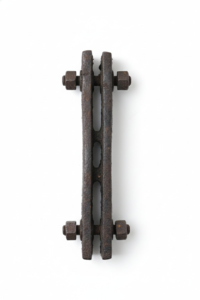
Fishplate
Material: Industrially manufactured wrought iron or steel.
Era: 20th century (peak of rail transport with PCCL).
Origin: England (usually imported along with the track by British companies).
Condition: Heavily corroded/rusty; suggests it is a natural relic from open areas or damp tunnels.
Dimension: Size depends on rail weight, approximately 25?45 cm long
Function: Connects the two ends of the track, allowing trains or railcars to run smoothly without slippage.
Capacity: Designed to withstand the high pressure of heavy tin ore loads.
Transportation
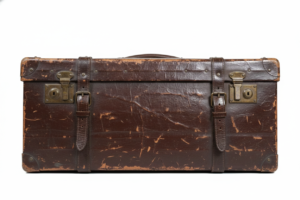
Leather Trunk
Material: Made of thick cowhide leather with brass fittings on the locks, knobs, and decorative nails.
Era: Late 19th to early 20th century (circa 1880s to 1910s).
Origin: Provenance: England or Central Europe; imported by British officers or skilled workers who came to Sungai Lembing.
Condition: The leather surface shows age- and use-related scratches, cracks, and discoloration (fading).
Dimension: Approximate dimensions: Length 86?92 cm, depth 54?55 cm, height 32?35 cm.
Function: Used as a carrying case for personal belongings on long journeys and often carried by immigrants or mining employees.
Capacity: High load-bearing capacity; the empty case weighs up to 20 kg.
Transportation
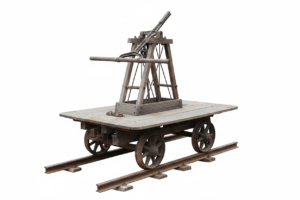
Handcar
Material: Wood (for platform) and cast iron/steel (for wheels, axles, and pump mechanism)
Era: 19th to early 20th century (Widespread into the 1950s)
Origin: United States (Manufactured by companies such as the Kalamazoo Manufacturing Company or the Sheffield Car Co. and imported for use by the British company PCCL)
Condition: Wood shows signs of aging and decay, while metal parts have a thick layer of rust due to age and weathering
Dimension: Sizes vary depending on track gauge, but standard platforms are typically about 1.8 m x 1.4 m.
Function: Used by maintenance crews to transport workers and tools along railway tracks in and out of mine shafts
Capacity: 2 to 4 workers (with light maintenance equipment)
Transportation
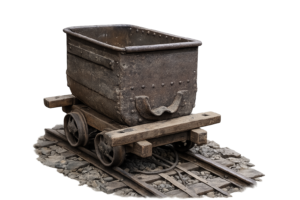
Mine Cart
Material: Riveted superstructure made of high-carbon steel, mounted on a wooden chassis (sleepers) with cast iron wheels.
Era: Late 19th to early 20th century (the heyday of PCCL in Sungai Lembing).
Origin: England (imported by the Pahang Consolidated Company Limited ? PCCL).
Condition: The metal surfaces show thick rust (iron oxide), and the wood is cracked with age.
Dimension: Standard size: Length 2.5 m, width 1.5 m, and height 1.2 m.
Function: Used to transport tin ore, tailings, and earth from underground mine workings to the surface.
Capacity: 1,000 kg ? 2,000 kg (approx. 1 to 2 tons).