16 artifacts found
✕ Clear filters
Mining Tools
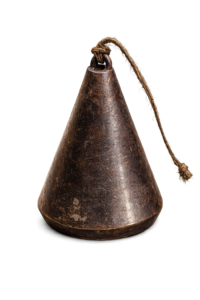
Plumb Bob
Material: Made of cast iron or bronze with a cord.
Era: Used from antiquity to the early 20th century (classic cone shape).
Origin: Locally in the Sungai Lembing workshop.
Condition: Dark patina and rust stains on the metal surface, and aged cord.
Dimension: Approx. 5?10 cm (standard size for hand tools).
Function: For determining the exact vertical alignment when constructing load-bearing timber structures or shafts in mine tunnels.
Capacity: Individual precision indicator
Mining Tools
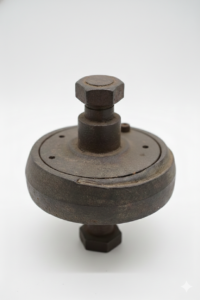
Iron Wheel
Material: Cast iron
Era: 19th to early 20th century
Origin: Local PCCL workshop.
Condition: The metal surface shows a dark patina and signs of wear from the constant friction of the cable.
Dimension: Diameter approx. 15?25 cm
Function: Serves as a deflection or guide pulley for a skip transporting tin ore.
Capacity: Designed to withstand the heavy load of a skip filled with minerals and pulled by a steel cable.
Mining Tools
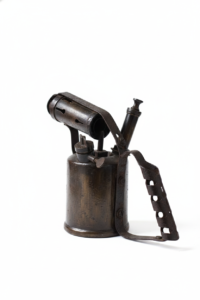
Blowtorch
Material: Brass and steel
Era: Early 20th century (approx. 1900 to 1950s)
Origin: Swedish (brands such as Primus, Optimus, or Sievert)
Condition: With age-related patina, and rust
Dimension: Height approx. 21 cm
Function: Burning torch; used for local heating, soldering, melting metal, or starting early steam/diesel engines
Capacity: Capacity approx. 0.5 liters
Mining Tools
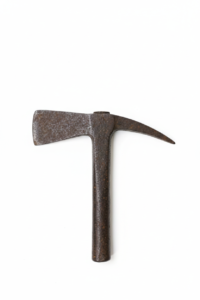
Axe
Material: Hand-forged iron head with a hardwood handle.
Era: 19th to early 20th century (Early Industrialization).
Origin: England or Europe (imported by British firms for use in Sungai Lembing).
Condition: Weathered; exhibits an oxide patina (rust) that gives the metal its original character.
Dimension: Overall length approximately 38?40 cm (15?16 in), chalk point approximately 18 cm (7 in).
Function: Used for punching holes in the timber of mine structures or as a multi-purpose tool for cleaning hard mineral surfaces.
Capacity: Single-handed tool for manual use
Mining Tools
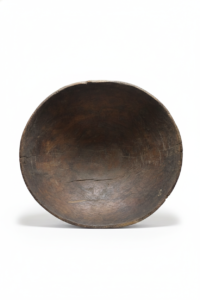
Tin Panning
Material: Carved wood (often from local, water-resistant hardwood)
Era: In use since the beginning of mining to the present day (traditional technology with continued relevance).
Origin: Sungai Lembing, Pahang; often handcrafted by locals from wood sourced from nearby forests.
Condition: The wood surface shows signs of continuous water erosion and discoloration from soil minerals.
Dimension: Diameter approx. 30?50 cm, concave.
Function: Used to separate tin ore from sand and soil using river current (gravity method).
Capacity: Soil/sand capacity: approx. 1?3 kg per pass.
Mining Tools
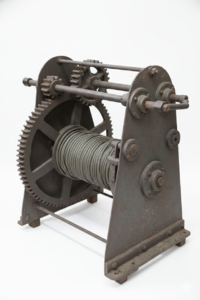
Mine Winch
Material: Made of cast iron or steel with a thick wire rope.
Era: 19th to mid-20th century.
Origin: England or Europe (imported by the British company PCCL for use in Sungai Lembing).
Condition: The metal surface shows uniform rust, and the wire rope appears to have been in use for a long time but is still intact on the drum.
Dimension: Sizes vary depending on load capacity, but these models are typically 60 to 90 cm high.
Function: Used for manually lifting or pulling very heavy loads with the aid of a double gear system to increase mechanical force.
Capacity: 2 to 5 tons, depending on the gear configuration.
Mining Tools
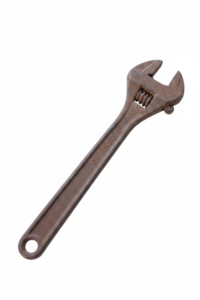
Adjustable Wrench
Material: Chrome vanadium steel, drop-forged for high strength and durability.
Era: 20th century (widely used in active mechanical engineering in Sungai Lembing).
Origin: Made in England or Sweden (usually brands such as Bahco or Crescent, imported by the British company PCCL).
Condition: The metal surface shows uniform rust and wear patterns due to long use and exposure to moisture in mining.
Dimension: Overall length approximately 150 mm to 380 mm
Function: For tightening and loosening nuts and bolts of various sizes by adjusting the movable jaws.
Capacity: The jaws are adjustable for nut sizes from 20 mm to 44 mm (depending on the wrench size).
Mining Tools
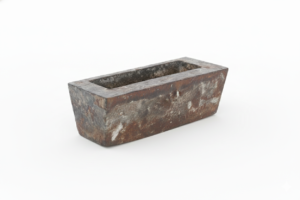
Trough
Material: Limestone
Era: 19th to early 20th century
Origin: Sungai Lembing, Pahang
Condition: Weathered, with erosion and discoloration from exposure to the elements over a long period.
Dimension: The size varies depending on its use, but it is a rectangular trough.
Function: Used as a trough for collecting water or washing ore in the mining settlement area.
Capacity: -
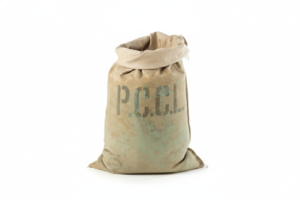
Mining Tools
Tin Ore Sack
Material: Thick and durable canvas or jute/burlap
Era: 1906 to the 1980s (Used throughout PCCL's operations in Sungai Lembing)
Origin: Pahang Consolidated Company Limited (PCCL), Sungai Lembing, Pahang
Condition: Weathered with traces of mineral dirt and wear on the fabric, but the "P.C.C.L." inscription is still clearly legible
Dimension: Standard size of a tin sack, estimated height 60?90 cm when filled
Function: Used for filling, storing, and transporting processed tin ore from the mill to the port
Capacity: Estimated weight: 50?62 kg (Standard weight of a "picul" tin ore to facilitate manual transport)
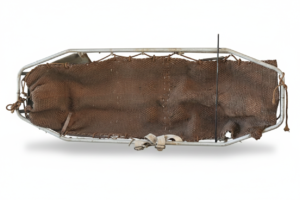
Mining Tools
Stokes Litter
Material: Steel or aluminum frame with wire mesh and heavy canvas.
Era: Widely used since the early to mid-20th century (original design dates from around 1900).
Origin: Manufactured in England or the USA (imported for the British company PCCL in Sungai Lembing).
Condition: Weathered with rust stains on the frame and damage to the canvas from high humidity.
Dimension: Approximate dimensions: Length 213 cm, width 60 cm, height 20 cm.
Function: Used for rescuing and evacuating injured persons from confined or steep spaces such as underground mine shafts.
Capacity: Load capacity up to approximately 680 kg.