Mining Tools
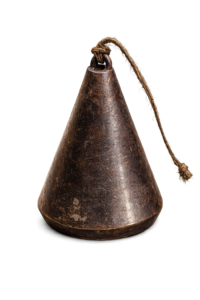
Plumb Bob
Material: Made of cast iron or bronze with a cord.
Era: Used from antiquity to the early 20th century (classic cone shape).
Origin: Locally in the Sungai Lembing workshop.
Condition: Dark patina and rust stains on the metal surface, and aged cord.
Dimension: Approx. 5?10 cm (standard size for hand tools).
Function: For determining the exact vertical alignment when constructing load-bearing timber structures or shafts in mine tunnels.
Capacity: Individual precision indicator
Mining Tools
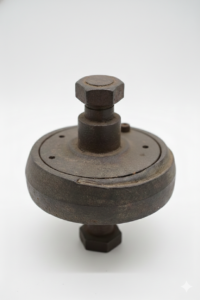
Iron Wheel
Material: Cast iron
Era: 19th to early 20th century
Origin: Local PCCL workshop.
Condition: The metal surface shows a dark patina and signs of wear from the constant friction of the cable.
Dimension: Diameter approx. 15?25 cm
Function: Serves as a deflection or guide pulley for a skip transporting tin ore.
Capacity: Designed to withstand the heavy load of a skip filled with minerals and pulled by a steel cable.
Entertainment
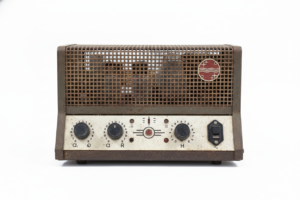
Amplifier
Material: The housing is made entirely of steel with a textured paint finish and a plastic/Bakelite control panel.
Era: 1951 to 1954.
Origin: Netherlands or Germany; manufactured by Philips Radios.
Condition: Significant rust on the top grille and soiling on the control panel indicate prolonged storage without maintenance.
Dimension: Approx. 340 x 210 x 197 mm (width x height x depth).
Function: Mixing console amplifier for mixing and amplifying audio signals from microphones, record players, or radios for public address systems.
Capacity: Output power approx. 20 watts, power consumption 112 watts.
Mining Tools
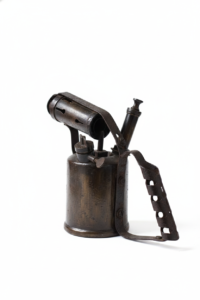
Blowtorch
Material: Brass and steel
Era: Early 20th century (approx. 1900 to 1950s)
Origin: Swedish (brands such as Primus, Optimus, or Sievert)
Condition: With age-related patina, and rust
Dimension: Height approx. 21 cm
Function: Burning torch; used for local heating, soldering, melting metal, or starting early steam/diesel engines
Capacity: Capacity approx. 0.5 liters
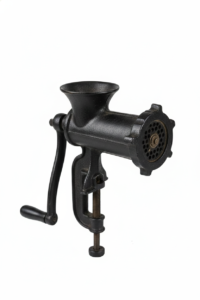
Domestic Item
Manual Meat Grinder
Material: Heavy cast iron, often with a tin or rust-preventative coating
Era: Late 19th to mid-20th century (widely used before the introduction of electric appliances)
Origin: Europe (e.g., Czechoslovakia or England) or USA (brands such as Enterprise or Chop-Rite)
Condition: (Restored) apparently cleaned and repainted (possibly with durable black paint) for display or collector purposes.
Dimension: Sizes vary by model, e.g., No. 10 or No. 5, with a feed chute of approximately 120 mm
Function: For manually mincing or grinding meat, fat, vegetables, and nuts
Capacity: Depending on hand speed; household models are generally designed for small quantities
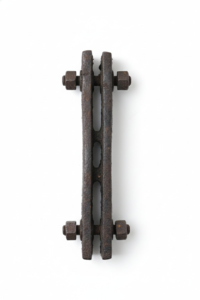
Transportation
Fishplate
Material: Industrially manufactured wrought iron or steel.
Era: 20th century (peak of rail transport with PCCL).
Origin: England (usually imported along with the track by British companies).
Condition: Heavily corroded/rusty; suggests it is a natural relic from open areas or damp tunnels.
Dimension: Size depends on rail weight, approximately 25?45 cm long
Function: Connects the two ends of the track, allowing trains or railcars to run smoothly without slippage.
Capacity: Designed to withstand the high pressure of heavy tin ore loads.
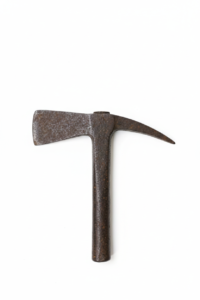
Mining Tools
Axe
Material: Hand-forged iron head with a hardwood handle.
Era: 19th to early 20th century (Early Industrialization).
Origin: England or Europe (imported by British firms for use in Sungai Lembing).
Condition: Weathered; exhibits an oxide patina (rust) that gives the metal its original character.
Dimension: Overall length approximately 38?40 cm (15?16 in), chalk point approximately 18 cm (7 in).
Function: Used for punching holes in the timber of mine structures or as a multi-purpose tool for cleaning hard mineral surfaces.
Capacity: Single-handed tool for manual use
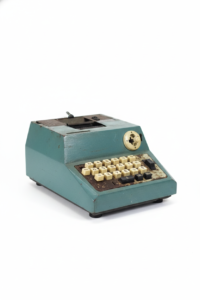
Office Item
Mechanical Adding Machine
Material: The casing is made entirely of metal or cast iron, the keys of plastic/Bakelite.
Era: Designed in 1949, widely produced in the 1960s.
Origin: Italy; manufactured by Olivetti.
Condition: The front panel shows significant rust stains and the original paint is faded.
Dimension: Height approx. 12 cm, length approx. 23 cm.
Function: Before the introduction of electronic calculators, this was used for mechanical arithmetic operations (addition, subtraction, multiplication) and accounting tasks.
Capacity: Can also calculate large numbers depending on the number of internal number wheels.
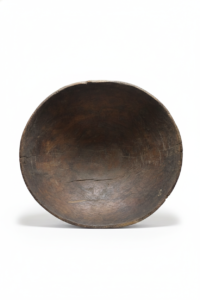
Mining Tools
Tin Panning
Material: Carved wood (often from local, water-resistant hardwood)
Era: In use since the beginning of mining to the present day (traditional technology with continued relevance).
Origin: Sungai Lembing, Pahang; often handcrafted by locals from wood sourced from nearby forests.
Condition: The wood surface shows signs of continuous water erosion and discoloration from soil minerals.
Dimension: Diameter approx. 30?50 cm, concave.
Function: Used to separate tin ore from sand and soil using river current (gravity method).
Capacity: Soil/sand capacity: approx. 1?3 kg per pass.
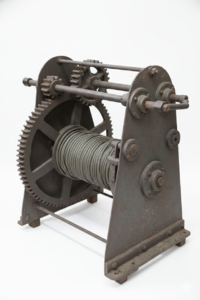
Mining Tools
Mine Winch
Material: Made of cast iron or steel with a thick wire rope.
Era: 19th to mid-20th century.
Origin: England or Europe (imported by the British company PCCL for use in Sungai Lembing).
Condition: The metal surface shows uniform rust, and the wire rope appears to have been in use for a long time but is still intact on the drum.
Dimension: Sizes vary depending on load capacity, but these models are typically 60 to 90 cm high.
Function: Used for manually lifting or pulling very heavy loads with the aid of a double gear system to increase mechanical force.
Capacity: 2 to 5 tons, depending on the gear configuration.